No no to the Berlin start of the Tour de France in 2029!

The discussion about international sports mega-events in Berlin has gained new momentum following the withdrawal of the Olympic bid. The possible Grand Départ of the Tour de France 2029 is also increasingly being framed politically. In this article, we explain why a differentiated consideration of both events is important and what special features distinguish the bid for Germany:
No No to the Berlin start of the Tour de France 2029: Why a differentiated approach is important
Following the withdrawal of Berlin's bid for the Olympic and Paralympic Games, the discussion about other major international sporting events in the capital has also become more intense.
Among the triggers of the recent debate were statements by the sports policy spokesperson of the Berlin Left, Claudia Engelmann. In an interview with rbb, she pointed to Berlin’s difficult budgetary situation and asked whether public funds were not needed more urgently for the renovation of existing sports facilities.
Engelmann subsequently clarified her position: she had not explicitly stated a no to a possible start of the Tour in Berlin. What was crucial was rather finding funding for sports events that did not come at the expense of everyday sports infrastructure.
This clarification is important. Of course, it is the task of politics to critically examine the use of public funds in large sporting events, to weigh the costs and benefits, and to reconcile different interests. After the submission of the application, it was also made clear that issues such as financing, sustainability, regional involvement, and long-term effects will be further concretized and constantly discussed throughout the application process.
Olympics and Grand Départ: different dimensions
The Olympic and Paralympic Games and the Grand Départ of the Tour de France are major sporting events with great international media impact. In their organizational, financial and temporal dimensions, however, they differ significantly from each other. Therefore, a detailed examination of the respective frameworks is necessary.
The time frame is also crucial: According to the current planning, the tour’s opening phase spans three to four stages. For the individual host regions, this means a time-focused presence of the tour – complemented by elements such as a team presentation or a prologue.
An sporting event that reaches out to people
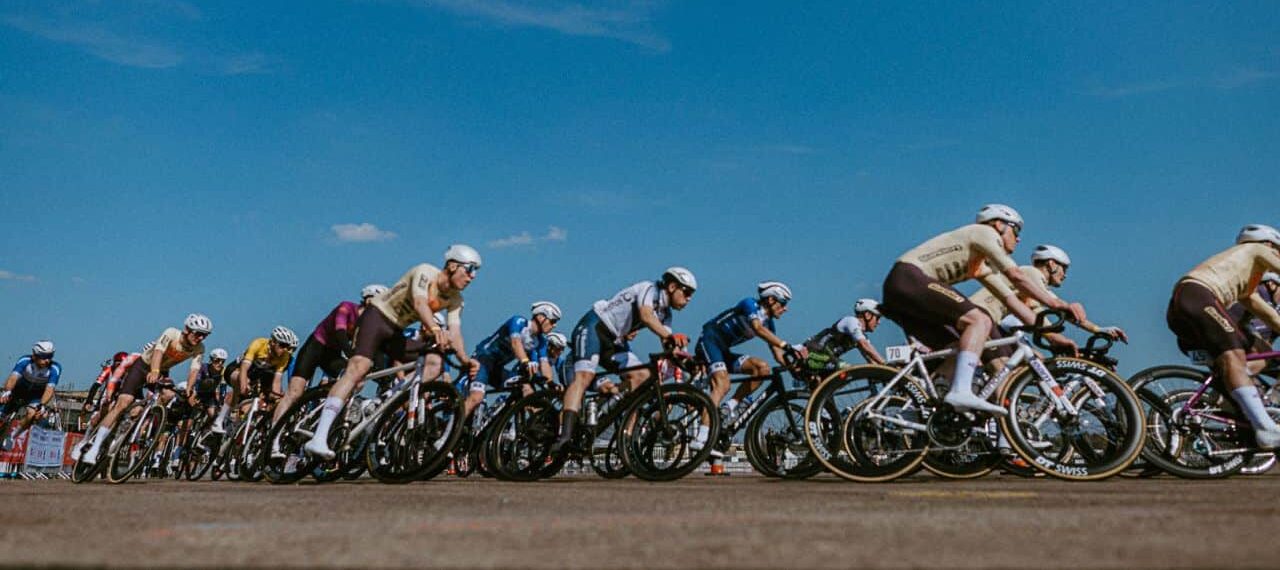
Another distinctive feature of road cycling is its accessibility. A Tour de France stage does not take place exclusively in a stadium or confined arena. The race takes place through city centers, smaller towns, and rural areas. The event thus reaches out to the people. For spectators, the racing action along the course is generally accessible free of charge.
An entire region as the host
The German bid is deliberately designed to encompass several host regions. The Grand Départ 2029 would connect different cities, countries, and very diverse areas. Our ambition is not only to make individual start and finish locations visible, but to lead the Tour through an entire region and to involve as many people, municipalities, and regions as possible along the route.
Wide support for the application
The application is already being supported today by various stakeholders. In addition, there are numerous supporters from the federal government, the states, municipalities, the business sector, and organized sports. This support does not, of course, replace political decisions regarding specific budgetary funds. It does, however, show that the application is not intended to be a stand-alone project.
For this reason, our approach remains to involve as many partners from politics, sport, business and society as possible in the further process.
Dialogue instead of hasty conclusions
The withdrawal of the Berlin Olympic bid has understandably raised questions. However, direct conclusions about the Grand Départ bid cannot be automatically drawn from this. The projects differ in important structural, temporal, and financial aspects.
At the same time, it is right that politics critically examines a possible start of the tour and weighs the financing against the needs of everyday sports.
Our vision of the start of the Tour de France in 2029 – from a country that is obsessed with cycling for just over a week – can only become reality if everyone works together.
#granddepartallemagne #granddepart2029