Grand Départ - more than just a few days of cycling races
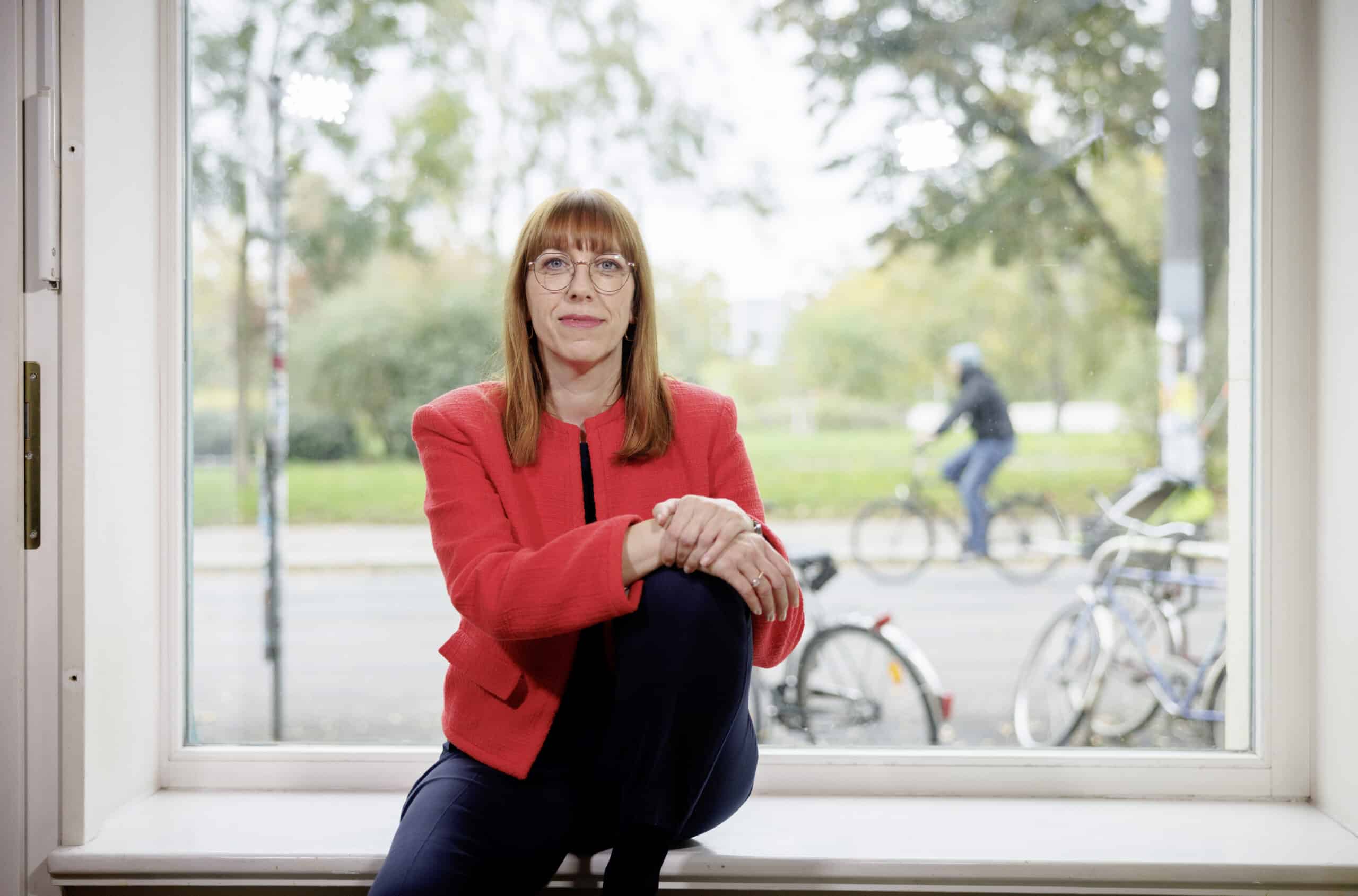
Photo: Oliver Killig
2029 marks the 40th anniversary of the Peaceful Revolution – and that is when the Tour de France is scheduled to start in Berlin and Central Germany. Katja Meier is a supporter from the very beginning. In an interview, she tells why the start of the Tour is much more than just a sporting event for her, what the project is already doing in the regions today, and what should remain in 2029.
The Tour de France is to be brought to Germany. What was your first thought and how did it come about to be linked to the project?
The idea itself fascinated me from the very beginning. In 2023 we started thinking about whether it would be possible to bring the Grand Départ to Saxony. With this idea, we approached the French ambassador, received a lot of support there, and finally sent a letter to the ASO in Paris in September 2024.
From the very beginning, it was clear to me that this could not just be a big cycling race. The 2029 anniversary of the Peaceful Revolution marks the 40th time. Saxony was one of its central venues, with Plauen, Leipzig, Dresden and many other places. The bicycle, in turn, stands for freedom, movement and encounter like no other means of transport. Bringing the Tour de France, Europe and German-French friendship together – that was already incredibly appealing to me at the time.
The whole thing really took off with the founding of Grand Départ Allemagne e.V. in 2024. The association went beyond Saxony to recruit incredible numbers of people and partners and has since driven them forward with enormous energy and passion. From our original idea for Saxony, it has gradually become a much larger community project for Berlin and the Central German region. It is truly inspiring to see what the association has made of this and how many people are now working on this goal. The fact that we actually have the chance today to experience the Tour de France here in 2029 is already quite remarkable.
A vision could become reality: The Tour de France will start in East Germany in 2029. What would that mean for you personally?
The start of the tour would be a truly goosebumps moment for me. Of course, it’s also because I’ve been following the idea since 2023 and know how far away it all seemed in the beginning.
But meanwhile, what the project is already triggering excites me even more, even though no decision has yet been made. People are writing to me, thanking me for the initiative, sending ideas and asking how they can get involved. Associations, municipalities and individuals are considering what their region could contribute.
The enthusiasm that cycling can trigger was witnessed this year at the European Peace Ride, when an incredibly large number of people cheered the riders on at the legendary steep wall in Meerane. And then one imagines that the Tour de France peloton would actually be racing through our region.
I have the impression that many people are very eager to work together again on something, to get involved, to be proud of their region, and to show others what they have to offer. That is exactly what excites me about this project as much as the tour itself.
What significance do such projects and initiatives have for the regions and, above all, for the people living there?
I believe that we sometimes underestimate the power that a shared positive goal can have. Especially in a time when so much is being talked about what doesn’t work, what is lost, or what we are fighting about, it can be incredibly beneficial to work together on something.
During the handover of the BidBook, Christian Prudhomme spoke very vividly about what it means for places and people when the Tour comes: Suddenly a place comes to the fore, people come together and show what makes their region special.
A recent study on the Tour de France shows what this attention can achieve. The Tour gives places visibility and recognition and can strengthen people’s connection to their home region. At the same time, support for far-right parties in municipalities along the route is measurably declining, especially in rural regions and where the far right was previously strong. Places that otherwise feel overlooked suddenly become visible and perceived as valuable parts of a shared history.
I find this particularly exciting in light of East Germany. Of course, a sporting event cannot replace good public transport connections or economic and social policies. But the tour can trigger something. Suddenly, the world looks at our region and at all that we have to show – our landscapes and cities, cultural and industrial history, our cycling tradition, and what the people here have built since 1989. For me, what is crucial is that people not only watch the event but also become part of this shared project. That is exactly why the planned accompanying program is so important and crucial.
In 2029, the Peaceful Revolution will be celebrated for the 40th time. Why is it important to focus on such anniversaries and occasions?
Because memory must be alive. People in Plauen, Leipzig, Dresden and many other places proved their courage in 1989, overcame their fear and fought for freedom and democracy. In doing so, they changed not only Germany but also Europe.
2029 offers the opportunity to tell this story to a new generation and to connect it to the present at the same time. That is why I find the connection with the Tour de France so compelling. A French sporting event that connects people from all over the world begins 40 years after the Peaceful Revolution in a region that at that time overcame a border between East and West.
However, a single race would not be enough to celebrate this occasion. Through youth encounters, cultural and democracy projects, German-French exchange and grassroots sports, we want to bring people together and make the history of 1989 more tangible. Then, we will not only remember 1989, but together with a new generation, ask: What do freedom, democracy and Europe mean today?
And we can’t postpone this anniversary anymore. So it has to happen in 2029. 😉
The host region has a long cycling tradition, vibrant clubs and many dedicated people. What opportunities do you see in strengthening these structures through such an event in a sustainable way?
The big opportunity for me lies in not celebrating the three-day Tour de France and then returning to normal routine afterwards. The path leading up to 2029 is at least as important as the race itself.
We have a great cycling history in Saxony and East Germany – from the Peace Ride to traditional clubs and places to the current European Peace Ride. At the same time, there are people everywhere who organize races, perform youth work, offer tours, or simply love cycling and want to make their municipality more cyclist-friendly.
It is precisely these structures that we should strengthen and connect by 2029. Examples include a Youth Peloton, German-French youth exchanges, school projects, grassroots sports events, joint tours, repair cafés, including bike offers, or projects on the history of the Peace Ride. Municipalities, associations and federations, the German Sports Youth, the German-French Youth Office, from the ADFC to the ADAC, can all make very different contributions.
My wish would be that in 2029 not only professionals will come, but that in the years before that people will say everywhere: This is also our Grand Départ and we are participating.
The Tour de France stands for top-level international sports. At the same time, cycling is also about everyday mobility, climate protection and quality of life. How can both worlds benefit from each other?
That is one of the greatest potential of the Grand Départ for me. The Tour can inspire millions of people to get involved in cycling. But this enthusiasm must then also find an equivalent in everyday life.
Sachsen has enormous potential for cycling, but our infrastructure still does not fully reflect this potential. Many people would like to cycle more often, but they do not do so because they lack safe and continuous cycling paths and simply do not feel safe in road traffic. This is crucial, especially for children, older people, or people who do not cycle daily.
To make cycling more attractive, it is not just those who already ride a bike in all weather conditions and on almost any road that are crucial. Much more decisive is the large group of people who are generally keen to ride a bike, but who need a safe and comfortable infrastructure.
That is why enthusiasm for cycling and investment in everyday cycling are intertwined for me. Safe intersections, continuous bike paths, good connections between the locations, and traffic planning where even a twelve-year-old child or a 70-year-old can safely get on their bike. That would be a real legacy of a Grand Départ.
The most beautiful effect of the Tour would be if hundreds of thousands of people were to stand on the roadside in 2029, be inspired by cycling, and we could at the same time ensure that more people can safely cycle in their everyday lives afterwards. In that case, top-level sports and everyday mobility would actually benefit from each other.
Imagine that we look back on a successful Grand Départ in autumn 2029. In your opinion, what should have remained in the region beyond the memories of a great sporting event?
I wish for memories of a huge festival, full streets, and images from Saxony and East Germany that have traveled around the world.
But when we look back in the autumn of 2029, much more should have remained: better cycling paths and more road safety. Strengthened associations and new offers for children and young people. Franco-German friendships that last beyond the Tour weekend. Perhaps new partnerships between schools, associations and municipalities. And people who, through this project, have only just started getting involved on the ground.
It would be best if something of this feeling remained, the one I am already experiencing right now: We can together build something. We can be proud of our region without isolating ourselves. And we can show others what a great, diverse and European part of Germany, Saxony and East Germany is. For regional connection need not be something exclusionary. It can arise from openness, encounter and feeling, to be seen and valued.
If there were some leftovers and hopefully also some new cycling routes, then the Grand Départ would actually have been much more than just a few days of the Tour de France.
Thank you for the conversation!